
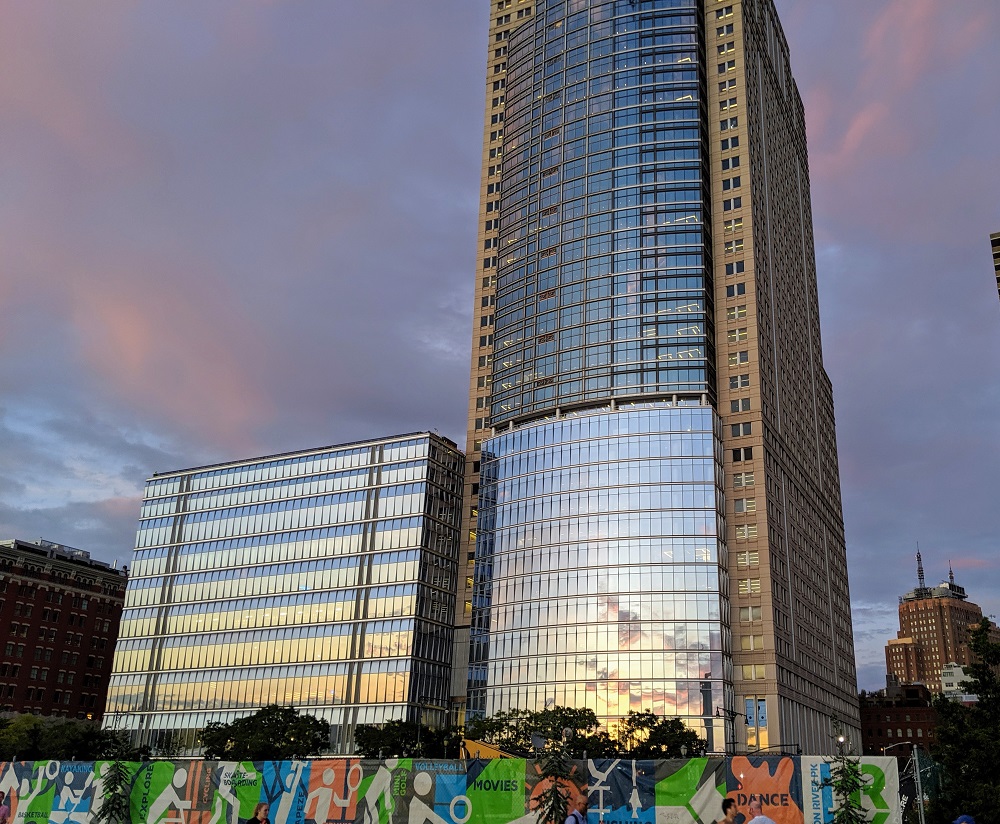

The narrative about the Citicorp Center skyscraper in New York, an iconic structure with a concealed and almost disastrous design error, stands as a significant illustration of the essential importance of honesty and skill in the field of engineering. For years, the public remained unaware that one of the city’s most recognizable towers was, in truth, a looming disaster awaiting the right storm to occur. This daunting secret was solely known by a single engineer, whose steadfast moral compass ultimately preserved countless lives. The account is a fascinating mix of design arrogance, mathematical accuracy, and the silent bravery of a professional who prioritized public safety above everything else.
The most praised aspect of the building was its avant-garde design. Constructed in the mid-1970s, the Citicorp Center represented an engineering feat, marking a significant shift from traditional skyscraper building techniques. It was elevated on four enormous stilts at each corner, each rising nine stories high, a decision reached to allow a new church to occupy a spot on the block. The tower seemed to hover above the street, perched on these stilts. This one-of-a-kind structure, which resulted from a compromise with the church to maintain its original setting, was celebrated for its imaginative and bold architectural approach. The design was considered a victorious instance of form following function, where a seemingly unsolvable issue was addressed with an ingenious and non-traditional approach.
Nevertheless, an essential error was embedded in this innovative design. A young student of civil engineering, during a class assignment, started to doubt the building’s structural soundness. Her evaluation, derived from a theoretical study, indicated that the tower might be susceptible to diagonal winds—those impacting the structure at a 45-degree angle. Traditionally, structural assessments only considered winds striking directly, at 90 degrees. This diagonal wind condition, seen as a rare occurrence, was not included in the building regulations or typical industry standards of the period. However, the student’s findings revealed that with this particular stress, the distinctive design of the building’s joint connections could be strained beyond their limits.
Upon hearing of this student’s findings, the skyscraper’s original design engineer, a brilliant and respected professional named William LeMessurier, took her concerns seriously. LeMessurier, known for his meticulous work, re-ran the calculations himself. To his horror, the student was correct. He had designed a building with a structural flaw, one that gave it a one-in-sixteen chance of catastrophic failure if a powerful hurricane were to strike New York City. The realization was a devastating blow, a personal and professional crisis that he grappled with alone. He was now faced with a profound moral dilemma: keep silent and risk a public tragedy, or come forward and risk his reputation, his career, and the financial ruin of his firm.
LeMessurier chose the path of honesty and responsibility. He made the decision to not only inform his clients and the city’s building department but to also take personal responsibility for the error. This act of courage set in motion a secret, round-the-clock operation to reinforce the building. Working under the cover of darkness, crews welded massive steel plates over each of the skyscraper’s 200 bolted joints. The process was painstakingly slow and dangerous, but it had to be done in secret to avoid public panic and preserve the building’s reputation. The cover story was that the crews were performing routine maintenance, a fabrication that allowed the work to proceed without incident.
The reinforcement project was a race against time. Hurricane Ella, a powerful storm, was making its way up the East Coast. As the hurricane approached, LeMessurier worked with government officials to plan for a potential evacuation, a contingency plan that thankfully never had to be put into action. The storm veered out to sea, and the secret repairs were completed without the public ever knowing the danger they had been in. The story of the Citicorp Center remained hidden for nearly two decades, finally coming to light only after a journalist uncovered the details. LeMessurier, who had retired, was finally able to share the full story of his decision, solidifying his legacy not just as a talented engineer but as a true professional who exemplified the highest standards of ethical conduct.
El relato del Citicorp Center es una lección significativa sobre la relevancia de la integridad estructural y la responsabilidad ética de quienes diseñan los edificios en los que vivimos. Resalta que incluso las mentes más brillantes pueden cometer errores, y que la verdadera talla de un profesional se ve en cómo afrontan esas fallas. Las acciones de William LeMessurier son un ejemplo claro del principio de que la seguridad pública debe anteponerse siempre al beneficio personal o al orgullo profesional.
His courage to face the consequences of his error and to act decisively to fix it is a powerful reminder that the buildings that shape our cities are not just monuments of steel and glass, but a reflection of the integrity of the people who build them. The story has been used as a teaching tool in engineering schools for decades, serving as a powerful case study in ethics and a cautionary tale about the importance of re-checking one’s work.