
Table of Contents
- 1. The Telegraph and Early Digital Signaling
- 2. Telephone Networks and Circuit Switching
- 3. Information Theory
- 4. The Transistor
- 5. Integrated Circuits and Microprocessors
- 6. Packet Switching
- 7. ARPANET
- 8. TCP/IP Protocol Suite
- 9. Domain Name System (DNS)
- 10. Ethernet and Local Area Networking
- 11. Fiber Optic Communication
- 12. The World Wide Web
- 13. Wireless Communication and Wi-Fi
- 14. Search Engines and Indexing Algorithms
- 15. Cloud Computing Infrastructure
- The Interconnected Legacy of Innovation
1. The Telegraph and Early Digital Signaling
The conceptual origins of the internet extend back to the telegraph of the 19th century. Through the conversion of language into electrical pulses sent across wires, the telegraph pioneered the concept of encoding information into distinct signals. The system created by Samuel Morse proved that data could move independently of physical transport. This abstraction—information detached from its medium—ultimately laid the groundwork for all digital communication.
2. Telephone Networks and Circuit Switching
The global telephone system introduced scalable network architecture. Circuit switching allowed two parties to establish a dedicated connection for the duration of a call. While later replaced by packet switching for data networks, circuit switching proved that large, interconnected communication infrastructures could be built, managed, and commercialized. It also drove advances in signal amplification and long-distance transmission.
3. Information Theory
In 1948, Claude Shannon’s work on information theory quantified data transmission. He introduced the bit as a unit of information and demonstrated how noise affects communication channels. Shannon’s formulas enabled engineers to calculate channel capacity and design error-correction methods. Without this mathematical framework, reliable digital networking at scale would not have been possible.
4. The Transistor
Created back in 1947 at Bell Labs, the transistor superseded cumbersome vacuum tubes. Because they were more dependable, compact, and power-efficient, these components made portable computers and networking gear possible. Throughout the 1960s, systems built on transistors drove early mainframes alongside switching networks, thus establishing the physical foundation for linked computing.
5. Integrated Circuits and Microprocessors
The integration of multiple transistors onto a single silicon chip revolutionized computing power and cost. Microprocessors, introduced in the early 1970s, allowed computing capabilities to be embedded into smaller devices. This miniaturization made routers, personal computers, and eventually smartphones feasible, expanding internet access beyond research institutions.
6. Packet Switching
Developed independently by Paul Baran and Donald Davies during the 1960s, packet switching fragmented data into compact bundles directed autonomously through a network. Contrary to circuit switching, this method optimized efficiency via the dynamic allocation of bandwidth. ARPANET, serving as the forerunner to the contemporary internet, integrated packet switching in 1969, thereby demonstrating both its robustness and scalability.
7. ARPANET
Funded by the United States Department of Defense, ARPANET linked research facilities so they could share computational assets. In 1969, the very first successful transmission occurred between UCLA and Stanford. Decentralized networking, redundancy, and interoperability across diverse systems were successfully showcased by ARPANET—foundational tenets that endure to this day.
8. TCP/IP Protocol Suite
Transmission Control Protocol and Internet Protocol, standardized in 1983, unified disparate networks into a single interoperable system. TCP ensures reliable delivery of data packets, while IP handles addressing and routing. This layered architecture allowed networks of different designs to communicate seamlessly, transforming isolated systems into a global network of networks.
9. Domain Name System (DNS)
Launched back in 1984, the Domain Name System converted human-readable domain names into numerical IP addresses. User-friendliness and scalability were brought to the internet through this breakthrough. Rather than memorizing numeric strings, individuals gained the ability to access services using recognizable names, which drove commercial growth and widespread adoption.
10. Ethernet and Local Area Networking
Developed by Robert Metcalfe in the 1970s, Ethernet standardized high-speed local communication between devices. It enabled offices, universities, and eventually homes to create local area networks that connected to wider networks. Ethernet’s simplicity and cost efficiency helped scale internet connectivity worldwide.
11. Fiber Optic Communication
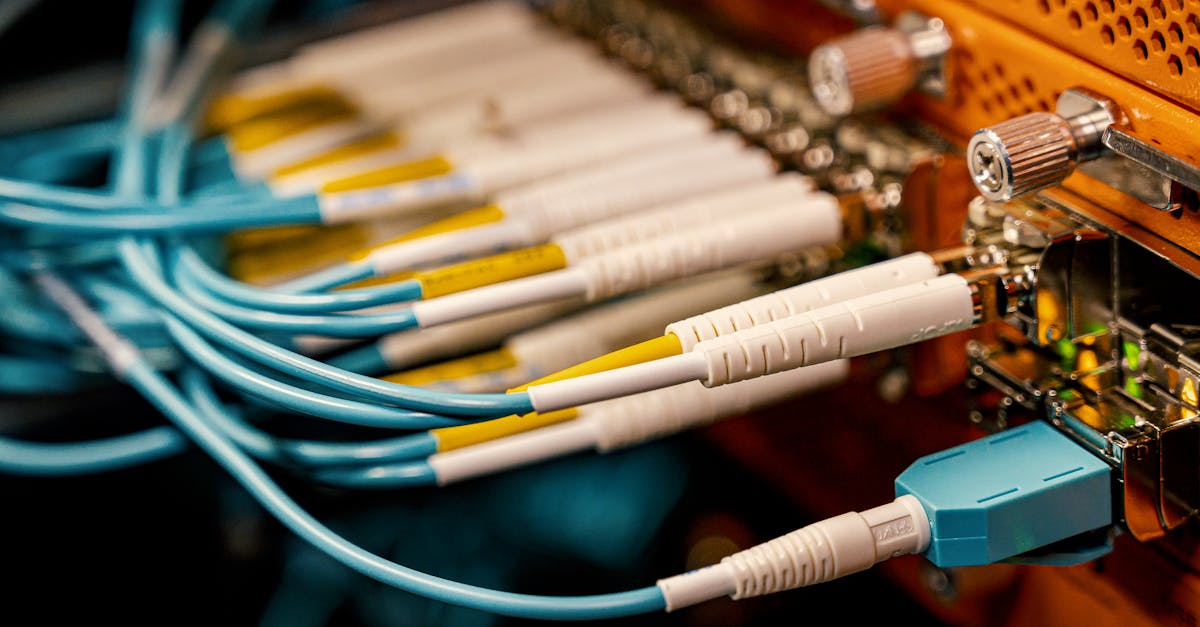
Fiber optics use light pulses to transmit data at extremely high speeds over long distances with minimal loss. Beginning in the 1980s, fiber replaced copper for backbone infrastructure. Modern submarine fiber cables carry terabits of data per second, connecting continents and supporting cloud computing, streaming, and global commerce.
12. The World Wide Web
Invented by Tim Berners-Lee in 1989, the World Wide Web introduced a system of hyperlinked documents accessed via browsers. Using Hypertext Transfer Protocol and standardized markup, it made the internet navigable and visually structured. The launch of graphical browsers in the 1990s accelerated public adoption and sparked the digital economy.
13. Wireless Communication and Wi-Fi
Wireless networking untethered devices from physical connections. Wi-Fi standards, beginning in 1997, enabled high-speed local wireless access. Combined with mobile broadband technologies, wireless communication expanded internet reach to remote areas and mobile users, fundamentally changing how people access information.
14. Search Engines and Indexing Algorithms
With the exponential expansion of digital content, search engines evolved into indispensable tools. Sophisticated indexing and ranking mechanisms sorted massive volumes of data, enabling people to access pertinent information without delay. Streamlined retrieval successfully turned the web from a static storage space into a vibrant knowledge network.
15. Cloud Computing Infrastructure
Cloud computing centralized processing and storage in distributed data centers accessible via the internet. Virtualization technologies optimized hardware use, while scalable infrastructure allowed businesses to deploy services globally without owning physical servers. This innovation underpins streaming platforms, software-as-a-service applications, and artificial intelligence services.
The Interconnected Legacy of Innovation
The internet did not arise from a single breakthrough, instead evolving through a layered accumulation of innovations spanning physics, mathematics, engineering, and computer science. Every single development—whether theoretical, such as information theory, or practical, like fiber optics—overcame a specific limitation: distance, reliability, scale, usability, or expense. Collectively, these answers established an adaptive, decentralized framework capable of scaling alongside fresh demands. Today’s internet mirrors a persistent dynamic between infrastructure and imagination, wherein foundational technologies spark novel applications, while budding requirements drive subsequent invention.