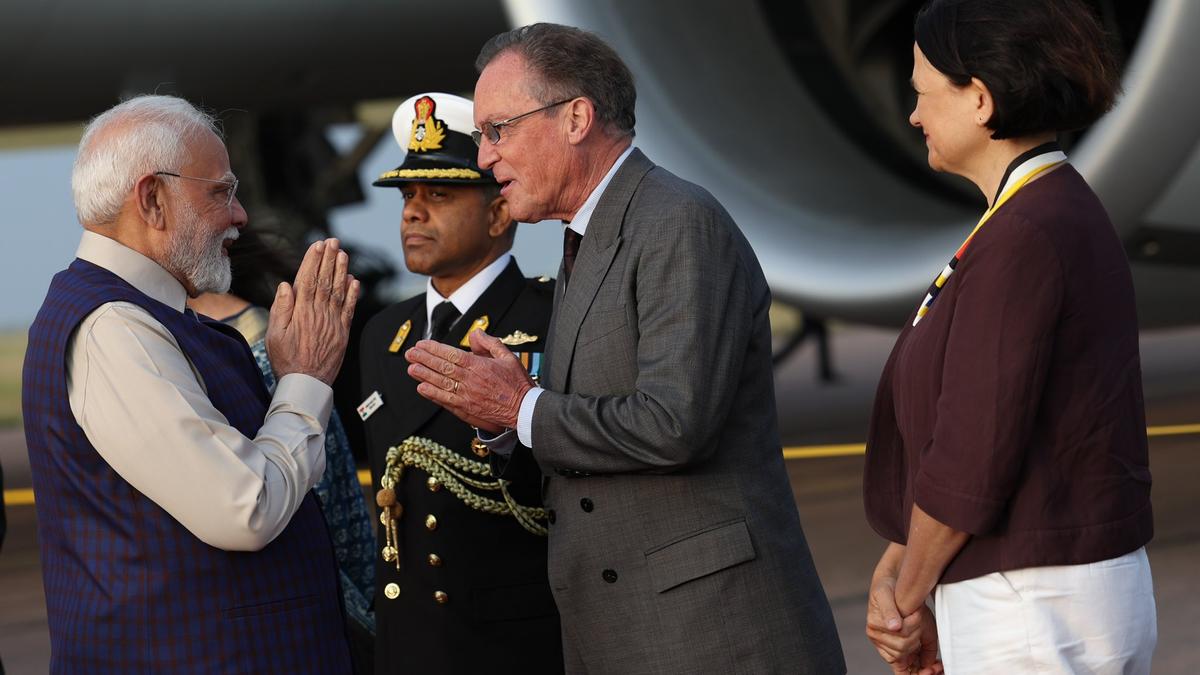

Following the recent completion of a significant trade agreement between India and the United Kingdom, a diplomatic meeting took place between the King and Indian Prime Minister Narendra Modi. This interaction, seen as a gesture of mutual respect and strategic alignment, highlights the evolving nature of economic and political ties between the two nations, especially in the context of the newly formalized trade framework.
The meeting occurred against a setting of increasing collaboration between the two nations, as they aim to strengthen their alliance in multiple areas, such as business, tech, environmental actions, and protection. With the trade agreement now officially established, the visit helped emphasize the joint dedication to a sustainable economic partnership based on mutual gain.
The trade agreement, which has been under negotiation for several years, represents a landmark moment in India-UK relations. It is expected to reduce or eliminate tariffs on a broad range of goods and services, streamline regulatory standards, and enhance market access for industries on both sides. For the UK, this deal is part of a wider strategy to strengthen trade ties outside the European Union, positioning itself as a global trading power in the post-Brexit era. For India, the agreement offers expanded export opportunities and greater access to capital, expertise, and technology.
During their dialogue, both the King and Prime Minister Modi reportedly explored the ramifications of the trade agreement as well as larger issues of dual importance. Among these were sustainable growth, academic exchange, cultural collaboration, and climate strategy. The discussion probably highlighted the value of connections between individuals, taking into account the considerable Indian population in the United Kingdom and the profound historical ties between the two nations.
While the King’s role in government is ceremonial and apolitical, his participation in such meetings often underscores the importance of a diplomatic relationship. The symbolic weight of royal engagement, particularly in the context of international diplomacy, can help enhance public perception and lend gravitas to key milestones like this agreement.
Observers have noted that the timing of the meeting reflects a broader shift toward closer engagement between London and New Delhi. As global power dynamics continue to evolve, both countries are increasingly looking to one another as strategic partners in a multipolar world. The convergence of interests in areas like digital infrastructure, defense collaboration, renewable energy, and education makes the relationship both pragmatic and forward-looking.
In realistic terms, the fresh trade pact is anticipated to offer substantial prospects for companies and employees. Industries like automotive, pharmaceuticals, textiles, and financial services are expected to gain from fewer obstacles and more defined guidelines for international trade. Moreover, small and medium-sized enterprises in both nations may discover new opportunities for global growth due to the streamlined regulatory framework.
Beyond the economic benefits, the agreement has been framed as a stepping stone toward a deeper strategic partnership. Both India and the UK are members of key international forums such as the G20 and Commonwealth, and share values rooted in democracy, the rule of law, and open markets. Strengthening bilateral ties may also contribute to a more stable and resilient global order, particularly at a time of heightened geopolitical uncertainty.
Prime Minister Modi, specifically, has highlighted the importance of commerce as a catalyst for progress and independence. The agreement supports India’s goals of establishing itself as a center for global production and innovation, inviting both investment and technology that can boost national advancement. For the UK, gaining entry to one of the quickest expanding significant economies worldwide is crucial as it expands its global trade relations.
Opponents of the agreement, on the other hand, have expressed worries about working conditions, ecological regulations, and the possible effects on domestic sectors. It will be essential to have thorough execution and continuous discussions among legislators, business executives, and community groups to make certain that the advantages of the deal are widely distributed.
As the details of the agreement begin to take shape, attention will now turn to how both governments manage its rollout. This includes updating domestic legislation, setting up bilateral oversight mechanisms, and engaging stakeholders to ensure smooth execution. It will also involve fostering business-to-business connections, promoting investment opportunities, and increasing public awareness of the new opportunities created by the trade framework.
The symbolic value of the King’s meeting with Prime Minister Modi cannot be overstated. It signals a moment of optimism and shared purpose at a time when global cooperation is often strained. It also reinforces the message that diplomacy and dialogue continue to play an essential role in shaping the international landscape.
In the coming months, the success of the trade deal will be measured not only in export figures or GDP growth but in the strength of the relationship it helps foster. Deeper collaboration on innovation, education, sustainability, and cultural exchange could serve as the true legacy of this agreement.
For both countries, this is not merely a commercial agreement—it signifies a refreshed phase in an extensive and intricate partnership, one that anticipates the future while respecting historical ties. As India and the UK move to fortify their strategic collaboration, the eagerness of their leaders to interact at top levels establishes a robust groundwork for ongoing cooperation in a world that increasingly appreciates dependable alliances.