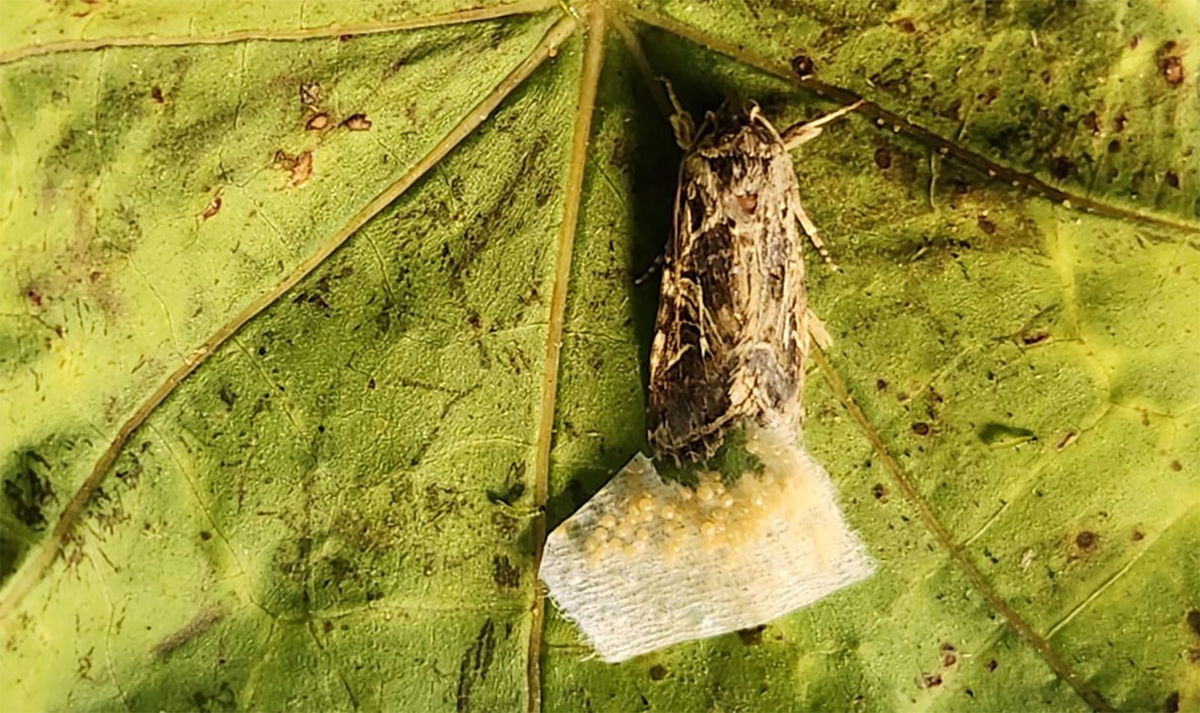

In an extraordinary development in our knowledge of insect behavior, recent scientific studies have shown that moths can recognize sound signals from plants — and they seem to favor those that are less noisy when deciding on egg-laying locations. This finding changes long-standing beliefs about how insects relate with their surroundings and introduces new pathways for research in ecological communication.
The results of the study indicate that moths, rather than being mere travelers within the natural realm, are highly sensitive to the faint noises generated by the vegetation surrounding them. Moreover, their capability to “hear” appears to affect vital choices, like choosing host plants for their offspring. Plants emitting more sounds, especially when stressed or under insect threat, tend to be bypassed.
While animals responding to sound is a well-established concept, the idea that insects like moths can respond to the auditory emissions of plants is novel. Until now, communication between insects and plants has largely been studied in the context of chemical signals: scents, pheromones, or visual cues like color and shape. But this acoustic dimension adds a new layer to the complex dialogue of nature.
The process is both refined and understated. Plants experiencing stress — whether from lack of water, physical injury, or being fed on by herbivores — have the ability to release minuscule vibrations or ultrasonic noises. While these sounds cannot be heard by humans, they can be detected by other living beings. These vibrations might serve as indirect alerts of distress, possibly signaling low nutritional value, an increased number of predators, or a diminished likelihood of survival for any eggs deposited in the area.
Moths, in turn, appear to have developed a sensitivity to these vibratory cues. In experimental settings, they consistently opted for plants that emitted less sound — particularly those that were healthy and not under any evident stress. This suggests that the auditory profile of a plant plays a key role in insect decision-making, particularly for species that invest in finding the optimal site for egg deposition.
This finding has profound implications for ecology, agriculture, and even pest management. If insects like moths are using sound to assess plant health, this raises questions about how widespread this phenomenon is. Could other insects also be using sound to make foraging or reproductive decisions? And might farmers one day use plant acoustics as a way to influence insect behavior, guiding pests away from crops without the use of chemicals?
In essence, this study has the potential to aid in creating more environmentally friendly farming methods. By comprehending how insects interact with the auditory “landscape” of a field, there could be opportunities to design settings that deter pests through sound. This might be achieved by altering the acoustic traits of plants or by adding harmless ambient sounds that obscure appealing signals from plants.
There is also the intriguing possibility that plants themselves are using sound as a form of passive defense. By emitting ultrasonic cues under stress, they might be signaling to potential egg-layers that they are already compromised — a form of honesty that may benefit both plant and insect in the long run. The plant avoids further damage, and the insect avoids investing in a host that offers low survival prospects for its offspring.
What makes this development especially exciting is that it reshapes our perception of plants as passive organisms. Increasingly, studies are revealing that plants are far more dynamic than previously believed. From sending chemical alerts to neighboring plants to adjusting their behavior based on touch and even light direction, plants are active participants in their ecosystems. The addition of sound-based signaling adds yet another layer to this growing picture of plant intelligence and agency.
The impact on biodiversity is equally significant. Grasping the complex interactions between plants and insects — extending beyond the visual and chemical realms — provides researchers with a more comprehensive understanding of ecosystem processes. This might clarify behaviors in nature that once appeared arbitrary or without purpose. Why do specific insects bypass plants that seem to be in good condition? Why do pest outbreaks distribute unevenly across an area? The explanation may reside in the acoustic environment — in delicate cues that have previously gone undetected.
Further studies are required to investigate if this behavior is exclusive to particular moth species or part of a wider pattern seen in night-active insects. This observation also prompts questions about the sensitivity of these insects to various sound frequencies and patterns emitted by plants. Might certain frequencies serve as repellents or attractants? If this is the case, could we replicate those frequencies to influence insect behavior in controlled settings?
Furthermore, there are possible issues to take into account. When insects depend on sound to find appropriate host plants, what occurs in environments with growing noise levels? It has been demonstrated that human activities can disrupt animal communication in multiple forms. Could noise pollution caused by humans interfere with the intricate interactions between moths and plants? If that’s the case, what are the wider consequences for ecosystems that rely on these connections to maintain equilibrium?
There’s also a philosophical aspect to consider. The notion that insects are making choices based on what they hear from plants blurs the lines we often draw between different life forms. It challenges the traditional view of the food chain as a simple hierarchy and encourages us to see nature as a network of continuous, complex negotiations — a world in which even the quietest players have something to say.
While this research is still in its early stages, its potential is vast. The idea that plant acoustics can shape insect behavior opens doors to new scientific disciplines, bridging plant biology, entomology, and bioacoustics. It also invites us to listen more carefully to the world around us, not just with instruments and sensors, but with a sense of wonder at the hidden conversations taking place every day.
As research keeps revealing how plants and their insect companions communicate through sound, it becomes apparent that nature functions in ways that are far more profound and detailed than what our senses usually perceive. Each new finding brings us nearer to comprehending — and potentially engaging with — the intricate symphony of life that envelops us.