
Former U.S. President Donald Trump is scheduled to visit Scotland for a five-day journey, garnering both global focus and expected demonstrations. This trip, which involves visits to multiple of his estates within the nation, occurs amidst elevated political discord and widespread discussion about his continued impact on U.S. and worldwide political landscapes.
Trump’s travel plans reportedly involve time spent at his golf resorts in Turnberry and Aberdeen, locations that have been central to his business interests in the United Kingdom for more than a decade. While the visit is being framed by his representatives as a private tour focused on his business ventures, it is already attracting significant public interest due to his political profile and polarizing legacy.
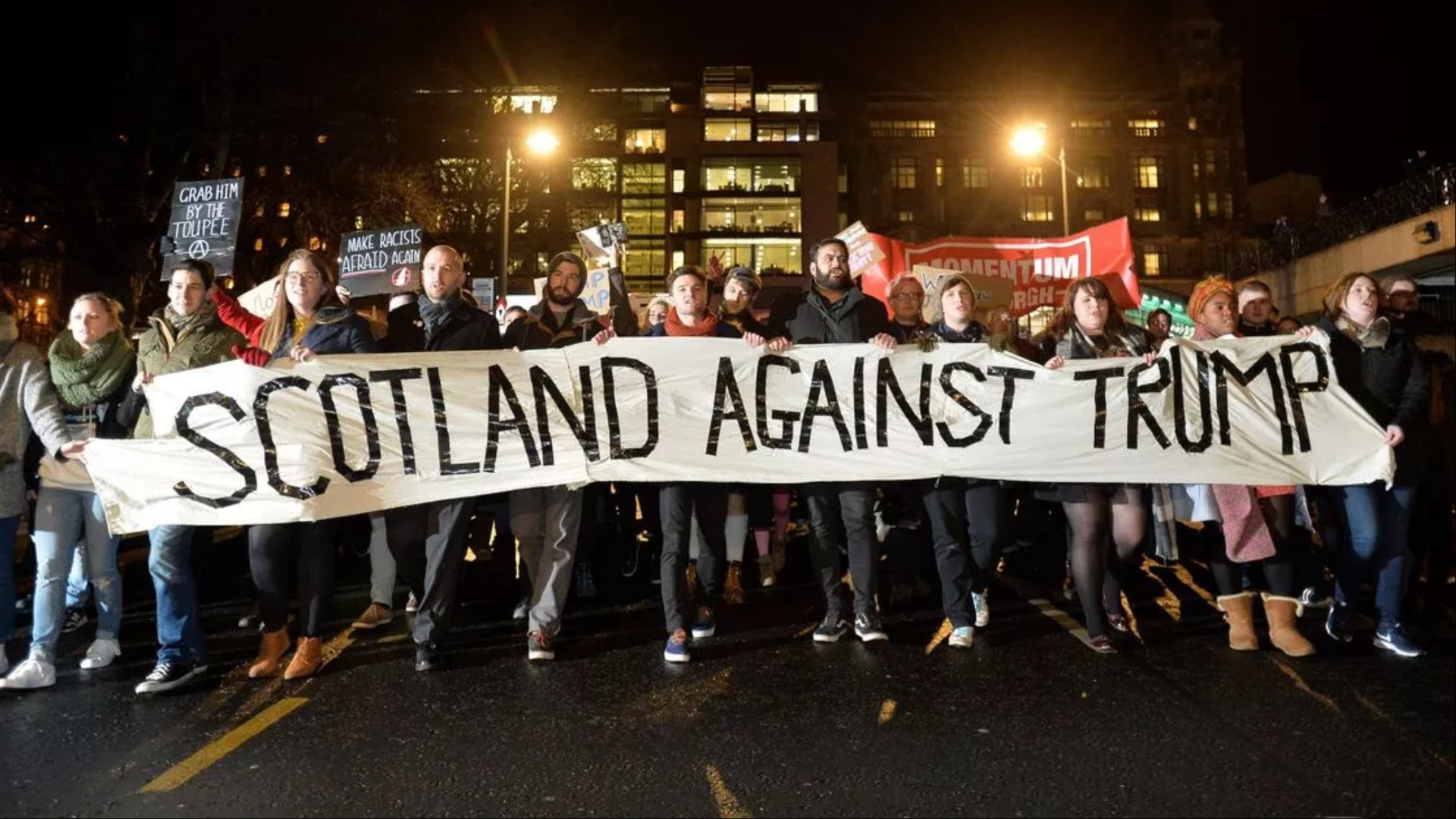
Local law enforcement agencies and municipal leaders are preparing for demonstrations expected to occur throughout his stay. Organizers from a range of political, social justice, and environmental groups have announced their intention to hold peaceful protests near Trump’s properties and at key public spaces. Some rallies are being coordinated in advance, while others may arise spontaneously in response to his movements.
Security measures have been intensified, with officials detailing strategies to handle the crowds and maintain public safety during the former president’s trip. On past visits to Scotland, Trump has attracted both outspoken supporters and equally fervent detractors, frequently leading to increased police presence and temporary road blockages.
Activists opposing Trump’s visit cite a range of concerns, including his past statements on immigration, climate change, and civil rights. Environmental groups, in particular, have voiced disapproval over the ecological impact of some of his golf developments in the region. Others view the visit as an unwelcome return of a figure they associate with political divisiveness and policy decisions that contradict Scottish and broader European values.
Despite the controversy, Trump maintains a loyal following in certain circles within the U.K., and his business investments in Scotland continue to generate both employment and tourism. Supporters argue that his presence brings economic benefits to the local economy and that he remains a high-profile international figure with a right to visit and oversee his business interests.
The trip also occurs during key changes in Trump’s political path following his presidency. In the United States, he continues to be an influential persona within the Republican Party and a likely contender for the next presidential race. This sustained importance introduces a dimension of political weight to his international visits, especially in countries that have closely observed his journey since his departure from office.
Local leaders in Scotland have taken varying stances on Trump’s arrival. Some have expressed neutrality, focusing on public safety and freedom of assembly, while others have voiced personal objections to his visit. The Scottish government, which has limited jurisdiction over foreign affairs but oversees policing and public gatherings, is coordinating with local authorities to manage logistics.
Meanwhile, Trump’s representatives have emphasized that the trip is strictly business-related, downplaying any political implications. However, given his global profile and the deeply divided opinions he continues to provoke, public reaction is expected to be anything but quiet.
Before his arrival, media attention has surged, with experts pondering the wider implications of the trip. Some perceive it as an attempt to enhance his global reputation, particularly as he keeps a campaign-like presence in the U.S. Others regard it as a regular assessment of personal investments now symbolic of his brand.
Protest organizers, for their part, say the demonstrations are aimed at sending a message about the values they believe should be upheld in democratic societies—transparency, inclusion, and climate responsibility among them. For many involved, the protests are not just about Trump as an individual, but about the broader political and environmental issues they feel his legacy represents.
As the visit unfolds, attention will likely focus not only on Trump’s itinerary, but also on how Scottish communities respond. The balance between maintaining civil order and protecting the right to protest will be closely watched, as will the tone and scale of public engagement.
Ultimately, Trump’s trip to Scotland is more than a private excursion. It serves as a microcosm of the global conversation around his continued influence and the challenges democratic societies face in reconciling political polarization, public dissent, and the right to free expression. Whether viewed through the lens of business, politics, or protest, the visit underscores the complex and enduring impact of one of the most controversial political figures of recent history.