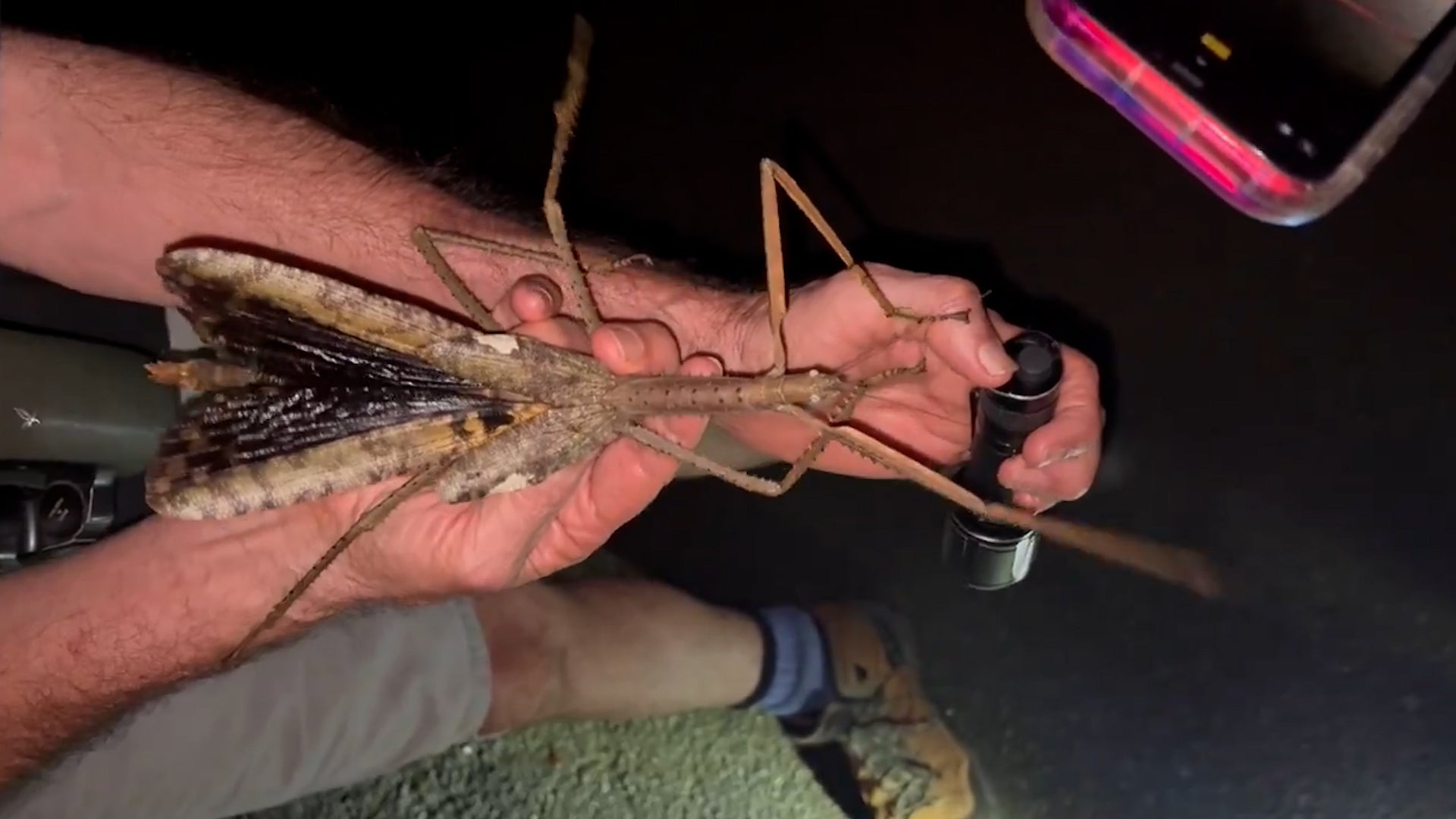

Researchers have identified a previously unknown species of stick insect that stands out for its surprising weight among its typically lightweight relatives. This remarkable creature, discovered during an expedition in a Southeast Asian rainforest, weighs approximately the same as a standard golf ball, making it one of the heaviest known members of the stick insect family.
The recently identified insect species showcases a number of uncommon physical traits that set it apart from other phasmids. Whereas most stick insects have adapted to have slim, lightweight forms to better blend in with branches and foliage, this particular species has evolved a broader, sturdier body. Researchers in entomology suggest that its distinctive body shape might be an evolutionary response to distinct environmental factors found in its secluded habitat.
Field biologists first noticed the insect due to its unusual movement patterns. Unlike typical stick insects that remain motionless for long periods, this species moves with deliberate, measured motions that initially made researchers mistake it for a small reptile in the forest undergrowth. Its distinctive brown and green marbled exoskeleton provides exceptional camouflage against the lichen-covered tree bark in its native ecosystem.
The discovery occurred during a biodiversity survey in a remote mountainous region known for its high number of endemic species. Scientists spent weeks tracking and observing several specimens to document their behavior, diet, and life cycle. Preliminary findings suggest the insects feed primarily on the leaves of particular tree species that grow abundantly in the area’s unique microclimate.
What captures the interest of scientists about this stick insect is its method of reproduction. Although numerous stick insects are capable of asexual reproduction via parthenogenesis, this newly identified species seems to necessitate mating between males and females. This feature, along with its restricted geographic distribution, renders the population particularly susceptible to changes in the environment.
The insect’s substantial weight relative to its body length—about the mass of a golf ball in a 25-centimeter-long body—poses interesting questions about its physiology and biomechanics. Researchers are particularly curious about how its muscular structure supports this unusual weight distribution and how its exoskeleton maintains durability without sacrificing flexibility.
Conservation biologists have already begun discussing protection measures for the species, as its highly specialized habitat makes it susceptible to deforestation and climate change impacts. The discovery site lies in a region experiencing increasing development pressure, raising concerns about preserving the delicate ecosystem this insect depends on for survival.
The research team used advanced imaging techniques to study the insect’s internal anatomy without harming specimens. Micro-CT scans revealed specialized digestive adaptations that may help process its particular diet, along with respiratory system modifications that appear unique among known phasmid species.
Behavioral observations revealed intricate social behaviors not commonly observed in stick insects. These creatures seem to use gentle vibrations transmitted along the branches they dwell on for communication, which indicates a more advanced social organization than that of their relatives. Scientists captured unique patterns that might function as warnings or signals for mating.
Taxonomists are actively engaged in categorizing the species within the phasmid lineage. Genetic research indicates that it branched out from its known relatives millions of years in the past, representing what scientists describe as a “living fossil” that retains ancient traits lost by other branches. This renders the discovery especially significant for comprehending the evolution of stick insects.
The scientific team plans to continue studying the insects in their natural habitat while establishing a captive breeding program to ensure the species’ survival. They emphasize the importance of preserving the entire ecosystem rather than focusing solely on this charismatic new species, as its survival depends on the complex web of relationships in its forest home.
This discovery highlights how much remains unknown about Earth’s biodiversity, even among relatively well-studied insect groups. Researchers estimate that thousands of arthropod species await discovery in tropical forests worldwide, many potentially holding clues to evolutionary mysteries or possessing unique biological traits.
For environmentalists, the large stick insect represents the marvels of the natural world and highlights the delicate nature of specialized ecosystems. Its restricted habitat and specific needs make it perfect for assessing the environmental condition in its indigenous area. By safeguarding its environment, numerous undiscovered species inhabiting the same forest could be conserved.
The investigation group intends to release comprehensive results in future scientific publications while collaborating with regional communities to create sustainable conservation plans. They aim for this remarkable new creature to captivate the public’s interest and highlight the significance of protecting biodiversity-rich areas around the globe.
As researchers further examine samples and information, they expect to uncover more insights into the extraordinary biology and ecology of this insect. Every breakthrough is likely to broaden our knowledge of evolutionary adaptation and the astonishing variety of living beings cohabiting our world. The stick insect, with a weight comparable to a golf ball, exemplifies nature’s boundless potential for wonder and creativity.